What Happens When Your NDIS Plan Runs Out Mid-Therapy? A Practical Guide
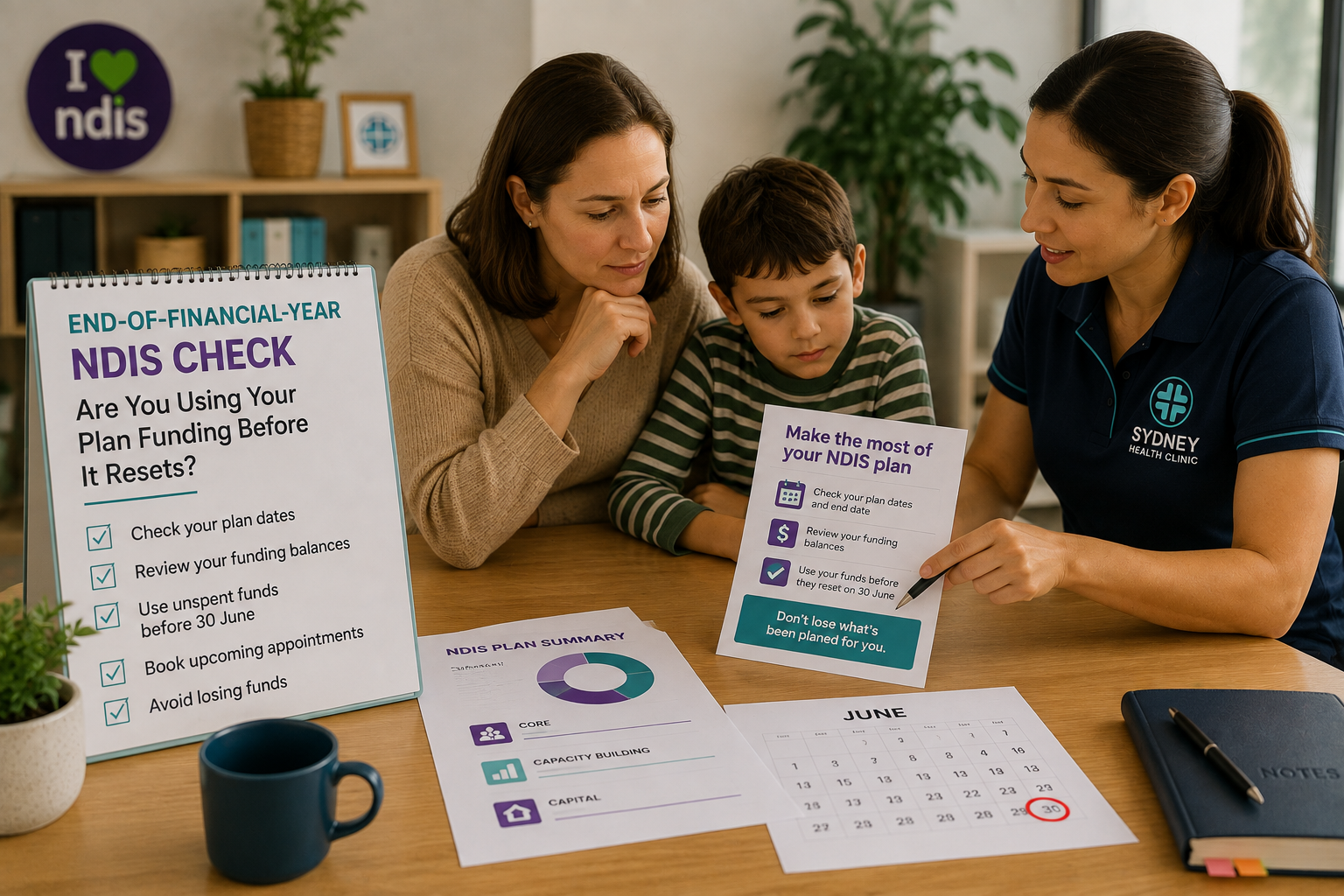
Nothing derails momentum quite like a mid-sentence stop. Your child is finally forming full sentences, or your own therapy is starting to click, and then a budget notification lands: your funding category is exhausted weeks before your plan review is even due. For families across Smithfield, Guildford, and the wider Western Sydney region, this scenario is far more common than the NDIS website lets on and far less scary once you know exactly what to do next.
Here's the practical, no-panic guide to what actually happens when a plan runs dry and how to keep therapy moving while you sort it out.
Why Plans Run Out Before They're Supposed To
Budgets get exhausted early for a handful of predictable reasons: sessions running more frequently than originally planned, a support category that was underfunded from the start, unexpected price increases, or simply a plan that didn't account for how much progress would actually require. It's rarely a sign anyone did anything wrong; it's usually a sign the original plan underestimated the level of support genuinely needed.
First Move: Don't Just Stop Therapy
The instinct when a budget hits zero is to pause everything until the next plan kicks in. Resist it if you can. Stopping therapy mid-program, especially for
speech therapy,
occupational therapy, or
behavioural therapy, can undo weeks of hard-won progress, and restarting from scratch later often costs more time and funding than simply bridging the gap would have. Before cancelling anything, it's worth exploring every option below first.
Check for Flexibility Between Budget Categories
Depending on how your plan is structured, some core supports budgets are flexible enough to move funding between categories so an underused category might be able to cover a shortfall elsewhere. This isn't always possible under capacity building or capital budgets, which tend to be more restrictive, but it's the first thing worth checking with your plan manager or the NDIA before assuming there's nothing left to work with.
Check for Flexibility Between Budget Categories
Depending on how your plan is structured, some Core supports budgets are flexible enough to move funding between categories so an underused category might be able to cover a shortfall elsewhere. This isn't always possible under Capacity Building or Capital budgets, which tend to be more restrictive, but it's the first thing worth checking with your plan manager or the NDIA before assuming there's nothing left to work with.
Request a Plan Reassessment, Not Just a Review
If funding has genuinely run out because your needs were underestimated, you can request an early plan reassessment rather than waiting for your scheduled review date. This requires evidence typically a report from your
psychologist or allied health provider explaining why current funding no longer reflects your actual support needs. A clear, specific report describing what's changed is usually the difference between a quick turnaround and a drawn-out wait.
Ask Your Provider About a Bridging Plan
Many clinics can work with families to space out remaining sessions, adjust frequency temporarily, or hold a spot open at a reduced cadence rather than stopping altogether while a reassessment is processed. It's a conversation worth having; early providers would generally rather adjust a schedule than lose a client's continuity of care altogether.
Frequently Asked Questions
Can I use funding from a different NDIS category if one runs out?
Sometimes — it depends on whether your plan uses flexible Core funding or more fixed Capacity Building and Capital budgets. Your plan manager or the NDIA can confirm exactly what movement is possible within your specific plan.
How long does an early plan reassessment usually take?
Timeframes vary, but a well-documented request with clear supporting evidence from your provider tends to move faster than one without it. It's worth submitting evidence as early as possible once you know funding is running low.
Will I have to pay out of pocket if my plan runs out before therapy is finished?
Not necessarily — most providers will work with you on adjusting session frequency or timing rather than expecting out-of-pocket payment, though policies vary by clinic. It's always worth asking directly rather than assuming the worst.
How can I avoid running out of funding again next plan?
Tracking your spend regularly throughout the plan, rather than only checking near the end, makes it much easier to flag a shortfall early. Your provider can also help build a realistic case for adequate funding at your next plan review.

Book an Appointment Now